
The Logic Blueprint: What is Problem Solving in Programming?
Have you ever looked at a complex application—like a global social media platform or a high-speed trading system—and wondered, “How did they even start building that?” When you’re a beginner, it’s easy to get distracted by the flashy syntax of Python, JavaScript, or C++. But if you ask any senior developer, they will tell you that the language is just a tool. The real work happens before a single line of code is typed.
That “real work” is what is problem solving in programming. It is the invisible engine that powers every successful software project. If coding is like writing a novel, problem solving is the plot, the character development, and the world-building that makes the story make sense.
In this deep-dive guide, we are going to explore why this skill is the ultimate “superpower” for developers. We will break down the mental frameworks used by experts to dismantle massive challenges and provide you with a step-by-step roadmap to improve your own logical thinking. Whether you are struggling to pass your first coding challenge or you are an intermediate dev looking to architect better systems, this guide is for you.
What is Problem Solving in Programming? (A Human Definition)
At its simplest, what is problem solving in programming is the ability to take a vague human desire (“I want an app that tracks my fitness”) and turn it into a precise set of instructions that a computer can execute.
Computers are incredibly fast, but they are also incredibly literal. They cannot “guess” what you mean. If you give a computer a set of instructions that is 99% correct, it will still fail. Problem solving is the process of closing that 1% gap through logic, structure, and foresight.
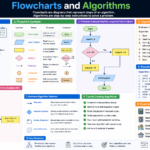
We often call this Computational Thinking. It isn’t just one skill; it is a collection of four distinct mental habits:
- Decomposition: Breaking a big, scary problem into tiny, manageable ones.
- Pattern Recognition: Spotting similarities between the current problem and things you’ve solved before.
- Abstraction: Stripping away the “noise” to focus on the core logic.
- Algorithmic Design: Writing the step-by-step “recipe” for the solution.
💡 Pro Tip: If you can’t explain your solution to a non-programmer using a pen and paper, you probably don’t understand the problem well enough yet to code it.
Why is it the Most Important Skill You Can Learn?
Why do we emphasize what is problem solving in programming so much? Why shouldn’t you just spend all your time memorizing libraries and frameworks?
1. Technology is Temporary; Logic is Forever
Programming languages go in and out of fashion. Ten years ago, everyone was obsessed with jQuery; today, it’s React and Next.js. However, the logic required to sort a list, search a database, or secure a user’s password hasn’t changed. If you master the logic, you can learn any new language in a weekend.
2. Efficiency Saves Money
In a professional setting, a “working” solution is the bare minimum. Companies want “efficient” solutions. A developer who understands problem solving can write a script that runs in 2 milliseconds, while a developer who just “guesses” might write one that takes 2 seconds. In a system handling millions of users, that difference is worth millions of dollars.
3. Career Longevity in the Age of AI
Artificial Intelligence is getting very good at writing boilerplate code. If you ask an AI for a “standard login form,” it will give it to you instantly. But AI still struggles with complex, unique business problems that require deep human context. By focusing on problem solving, you are making yourself “AI-proof.”
The Core Framework: Step-by-Step
When you encounter a new coding challenge, don’t just start typing. Use this 5-step framework to stay organized.
Step 1: Deep Understanding (The “Why”)
Before you look for a solution, interrogate the problem.
- What is the input? (e.g., A list of names)
- What is the output? (e.g., The same list, but alphabetized)
- What are the edge cases? (e.g., What if the list is empty? What if two names are the same?)
Step 2: Decomposition (The “Divide and Conquer”)
If you have to build a “Search Engine,” don’t try to build the whole thing at once. Break it down:
- How do I read a web page?
- How do I store the words on that page?
- How do I rank those pages by importance?
- How do I show the results to the user?
Step 3: Solve It Manually (The “Human Test”)
Forget the computer for a moment. If I gave you a deck of cards and told you to sort them by number, how would you do it? You might look for the smallest card and put it at the front, then repeat. That’s an algorithm (specifically, a Selection Sort). If you can’t solve it manually, you’ll never be able to tell the computer how to do it.
Step 4: Write Pseudocode (The “Bridge”)
Pseudocode is a way of writing code that uses human language. It helps you focus on the logic without worrying about semicolons or syntax errors.
Example:
FOR EACH item in the list:
    IF the item is a duplicate:
        REMOVE the item
    ELSE:
        KEEP the item
DISPLAY the cleaned list
Step 5: Implementation and Refinement
Finally, you translate your pseudocode into your chosen language (Python, JS, etc.). Once it works, you refactor—you look for ways to make the code cleaner, faster, and more readable.
Practical Examples: Problem Solving in Action
Let’s look at a common problem: Finding the Largest Number in a List.
The Logic Process:
- Understand: I have a list of numbers. I need to find the biggest one.
- Manual Solution: I’ll look at the first number and remember it. Then I’ll look at the second. If the second is bigger, I’ll “forget” the first and remember the second. I’ll do this until the end of the list.
- Pseudocode:
- Create a variable max and set it to the first number.
- Loop through the rest of the numbers.
- If the current number is > max, update max.
- Return max.
The Code (Python):
def find_max(numbers):
    if not numbers:
        return None # Edge case: empty list

    highest = numbers[0]
    for num in numbers:
        if num > highest:
            highest = num

    return highest

print(find_max([10, 5, 72, 18])) # Output: 72
Common Mistakes to Avoid
- The “Syntax Trap”: Spending hours Googling “how to write a loop in Java” before you even know why you need a loop.
- Ignoring the “Edge Cases”: Building a calculator that works for 1+1 but crashes if you try to divide by zero.
- Over-Engineering: Using a complex Artificial Intelligence model to solve a problem that could be fixed with a simple if statement.
- Copy-Pasting Without Understanding: Grabbing code from Stack Overflow or AI without knowing how it works. This is like “solving” a math problem by looking at the back of the book—you haven’t actually learned anything.
Pro Tips & Best Practices
To excel at what is problem solving in programming, you need to train your brain.
- The Rubber Duck Method: When you’re stuck, explain your code line-by-line to a physical rubber duck (or any object). The act of speaking the logic aloud often reveals the flaw in your thinking.
- Practice “Whiteboarding”: Try solving problems on a physical whiteboard or paper. It forces you to think about the logic without the crutch of an “Autocomplete” feature.
- Study Data Structures: Learning about Arrays, Linked Lists, and Hash Maps is like a carpenter learning about different types of wood. It tells you which “material” is best for the “job.”
- Don’t Fear Failure: Most of programming is failing. Your code will break. You will get error messages. A great problem solver sees an error message as a “clue” in a detective story, not a sign of defeat.
Real-World Use Cases
How does this play out in the industry?
1. Navigation Apps (Google Maps)
The problem: “Find the fastest route from point A to point B.” The solver must account for traffic, road closures, speed limits, and even the user’s preference (e.g., “avoid tolls”). This is a classic “Shortest Path” problem-solving exercise.
2. Social Media Algorithms
The problem: “Show the user content they will actually like so they stay on the app.” The server has to solve the problem of processing your past likes, your friends’ activity, and current trends in real-time to generate a feed.
3. Cybersecurity
The problem: “How do we prove this user is who they say they are without letting a hacker guess their password?” Developers solve this using multi-factor authentication (MFA) and encryption logic.
Mini Project: Build a “Palindrome Checker” Logic
A palindrome is a word that reads the same backward as forward (like “radar” or “level”).
The Logic Challenge:
- Input: A string.
- The Goal: Return True if it’s a palindrome, False if not.
- Step 1: Clean the string (remove spaces and make it lowercase).
- Step 2: Reverse the string.
- Step 3: Compare the original with the reversed version.
The Code (JavaScript):
function isPalindrome(str) {
  // Step 1: Clean the input
  let cleanStr = str.toLowerCase().replace(/[^a-z0-9]/g, '');

  // Step 2: Reverse it
  let reversedStr = cleanStr.split('').reverse().join('');

  // Step 3: Compare
  return cleanStr === reversedStr;
}

console.log(isPalindrome("Racecar")); // Output: true
console.log(isPalindrome("Hello"));   // Output: false
Frequently Asked Questions (FAQs)
1. Do I need to be a math genius to be good at problem solving?
Absolutely not. You just need to be a “logic” genius. Basic algebra is helpful, but the ability to think sequentially and identify patterns is far more important than knowing complex calculus.
2. How long does it take to get good at this?
It’s a lifelong journey. You can learn the basic framework in a few days, but becoming an expert takes years of seeing different types of problems and building a “mental library” of solutions.
3. What platforms are best for practicing?
Check out LeetCode, Codewars, or HackerRank. They offer thousands of problems ranked by difficulty, allowing you to build your muscles gradually.
4. Why is my logic perfect but my code still doesn’t work?
This is usually a “syntax” or “environment” issue. Check for typos, mismatched brackets, or versioning issues in your language. This is why we separate logic from coding—it helps you identify if the mistake was in your thinking or your typing.
5. Should I learn one language deeply or many languages poorly?
Learn one language (like Python or JavaScript) deeply. This allows you to focus 100% of your energy on problem solving rather than constantly looking up how to write basic syntax in a new language.
Conclusion: Start Your Logic Journey
Mastering what is problem solving in programming is the difference between being a “coder” and being a “software engineer.” A coder can write lines of text; an engineer can solve human problems using technology.
Don’t be discouraged if you feel stuck today. Every time you struggle with a bug, your brain is literally building new neural pathways that make you a better solver. Embrace the struggle, follow the framework, and remember: every massive application on your phone started as a small, simple problem that someone decided to solve step-by-step.
Start practicing now! Head over to a site like Codewars and try just one “Easy” problem today. Don’t look at the solution until you’ve tried for at least 30 minutes.
Check our next guide on Data Structures to learn the tools that make problem solving even easier!